Ghost

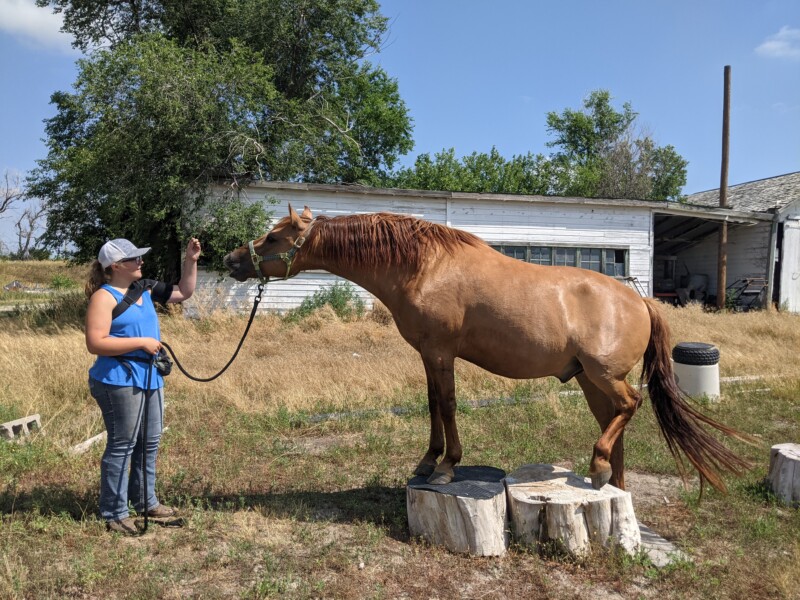
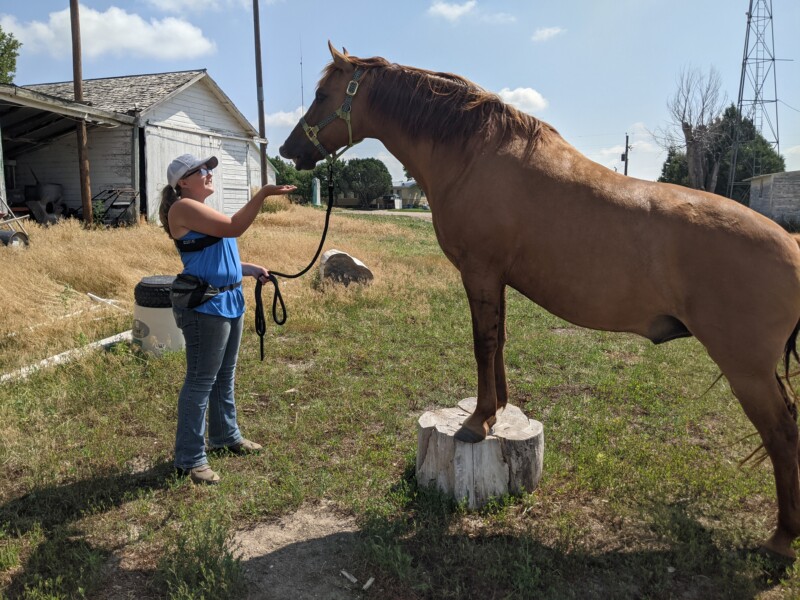
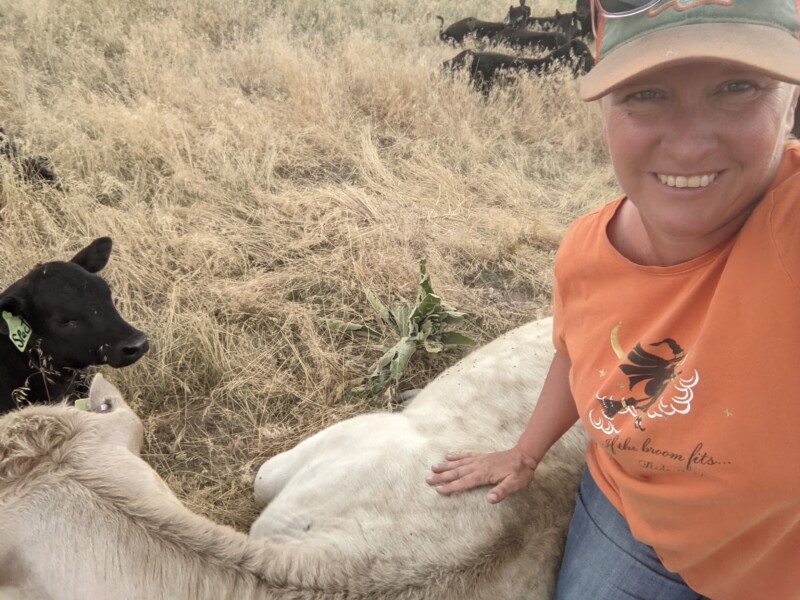
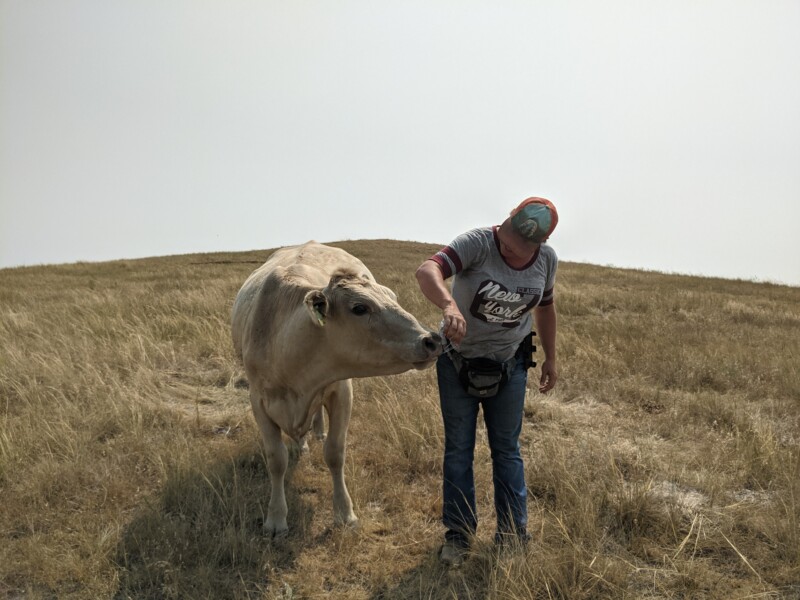
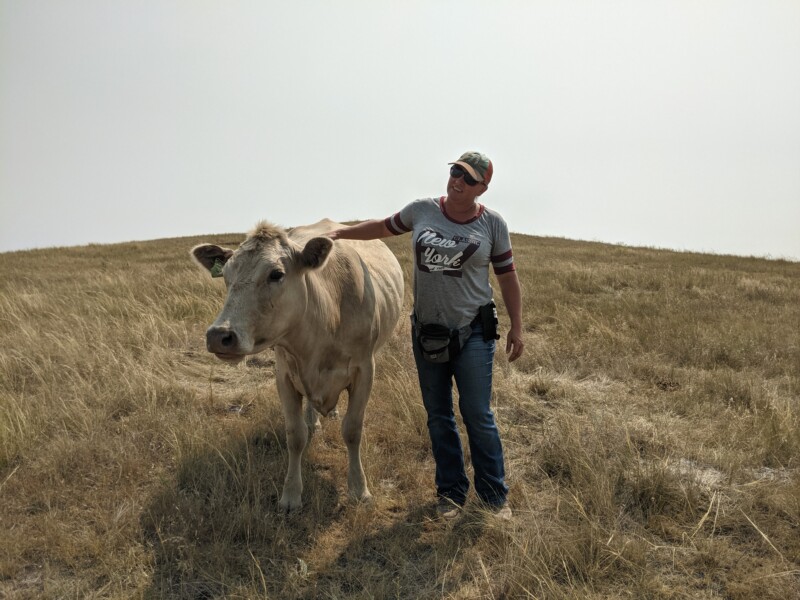
A friend came along with me to check cows. I also remembered to bring cookies for Ghost. As a result we got some video of Ghost doing her tricks!
Ghost remembers how to spin. We played around with it a bit the other day but her calf wanted to nurse. The calf is as big as she is so it was hard for Ghost to manage to spin around the calf. Luckily we weren’t there at lunch time this time around.

Hypermobility, for whorl page

What can the legs of a horse tell us about temperament?
In some cases legs can tell us quite a lot.
 
When a horse’s ligaments are weak due to hypermobility it gives them a lack of stability. The problem often shows up first in the suspensory ligaments, where it is known as DSLD, but it exists through the ligaments of the entire body.
When a horse feels a lack of balance, strength, and control because of the loose ligaments through their body they become nervous and reactive.
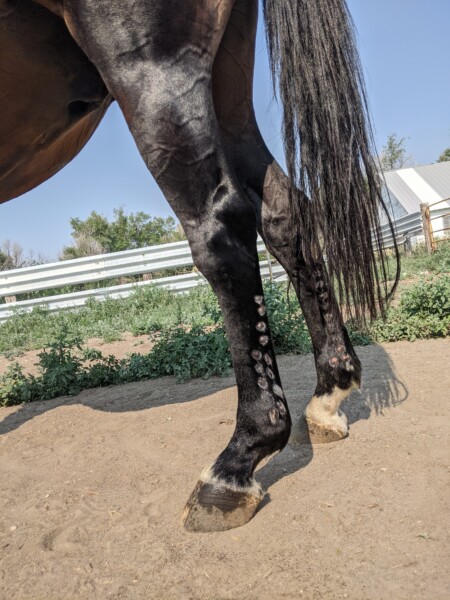
Hypermobility will often present like this horse. The hind pasterns are weak and sinking lower. This has caused what may have already been fairly straight hind legs to become almost completely straight. We can see by the pin firing that there has been lameness along the way. The attempt to treat it was misguided and focusing on the wrong issues. Not that pin firing is effective for anything.
This horse also has a pendulous belly. The loose ligaments, along with poor conformation and bad training, allow it to hang instead of being held up by the muscles as it would be in a ‘normal’ horse.
Horses with weak sunken pasterns will usually have high flashy action which is also a normal accompaniment to a high strung, reactive temperament.
There are so many factors that go into the creation of temperament and personality. Hypermobility can cause what would otherwise be a calm steady horse to become reactive and spooky. Nothing works alone in a horse’s body and the entire picture needs to be taken into account when we look at whorls and all the other ‘tells’ on the outside of a horse that can give us clues to what is going on inside.
 
horsewhorls.com


New Whorls? for the whorl page

Whorl develop in the womb as the horse develops. We know that and we know that this is why we can use them to tell us about the inside of the horse, or any other creature with hair. The skin and hair follicles are made right alongside the brain and muscle.

Animals are born with the whorls that they will have.

Or are they?

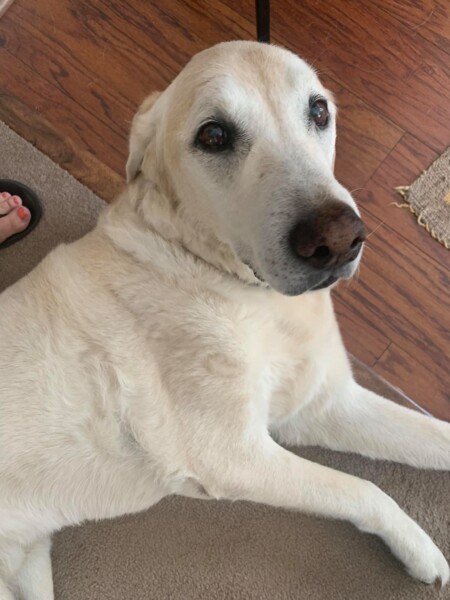
This dog is an anomaly in so many ways. Apparently he didn’t feel the need to follow the rules in this anymore than he has in the rest of his life. Diagnosed with a bone tumor at eleven he was given no chance of survival, due to his age there was no likelihood of treatment succeeding.

Told to take him home and make him comfortable his people did exactly that. Due to that love and care he is still going strong.

The other thing that he is doing is developing a whorl!

Directly over the location of the bone tumor a whorl has grown in the hair over the last few weeks.

Whorls aren’t supposed to be able to appear after an animal is born. It just isn’t done.

The hair is directly connected to the muscle underneath, to the body. Everything is connected, which seems obvious but is constantly being driven home to me. Why shouldn’t changes in the underlying structure cause changes in the way the hair grows?

This deserves a scientific paper written about it. All it will get is its own post. This is a very big deal. People often ask if their horses whorls could possibly be changing. I can no longer say no with confidence.


Ball Challenge

We are doing a ball challenge over in the Academy. Everyone who wants to contribute a video of their horse playing ball will be included in a group video for all of us to share.

I was able to convince my daughter to come play with me. She has been having fun stealing my gopro and making then editing videos of her adventures around the farm. I thought she might like to edit this one and maybe she will do her own take on it. For now this is mine.


Company

We had company over to play yesterday!

A neighbor girl came over. She has her own horses and is a very good horseperson. We worked on some ground work with Heildorf. Touched on the basics of starting clicker training, ground manners, targeting, that sort of thing. Then she went to playing with Heildorf. They played with smile, Spanish walk, and pedestal work.

She was doing such a great job I threw her up on Rusty for even more fun. We practiced riding basics, good hand position, leg yield, body position to get a good back without the reins. She did great. Rusty gets frustrated easily but was very patient with us.

It was a fun day and I hope that I get another play date soon. It’s no fair that they are mostly limited to the children 😉


Trust

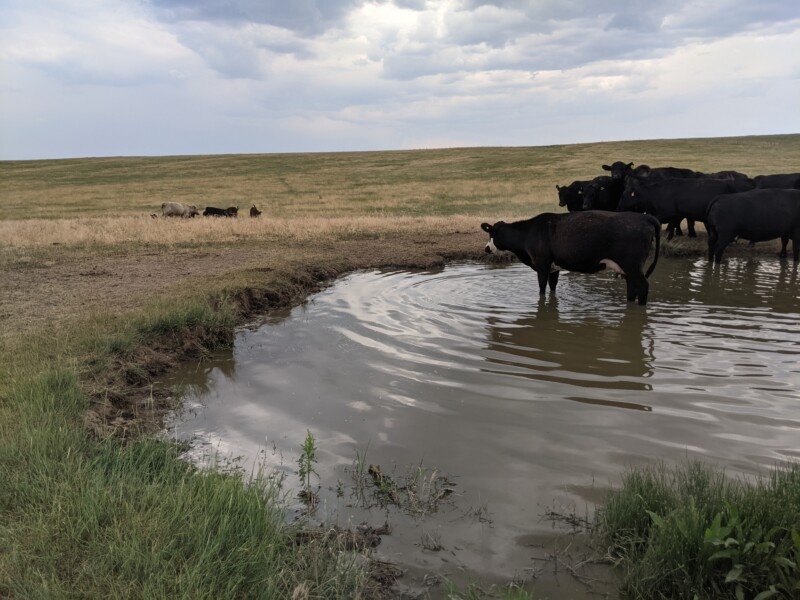
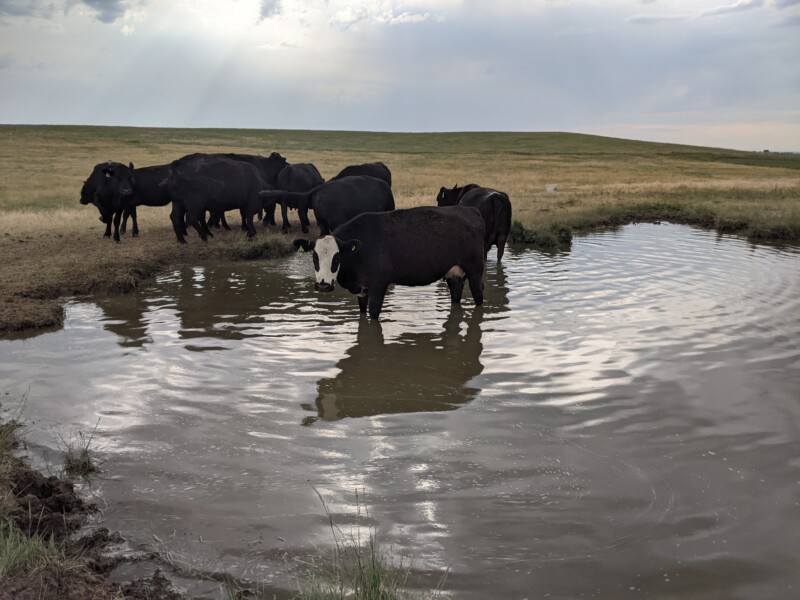
I went out to check the tank in the cows pasture last week. The flies have been awful this year. Most of the herd was huddled together swatting flies, in or out of the pond.

All of them except Ghost. She isn’t really included in the herd. She came running up to me as I shut the 4wheeler off, begging me to help her.

I ran my hands down her back, brisket, and legs, smashing as many flies as I could. Rubbing away the pain of the fly bites. Scratching where it itched. She knew I would help her. She trusts me to take care of her and do my best to fix whatever problems she had.

Two of the horses wandered off the other day. I had let them both out to graze, together instead of only one at a time like usual. There is only one unfenced path out of the yard. I don’t worry a whole lot about them leaving. I don’t think there would have been a problem but those same flies, driving everything crazy. They wandered farther than usual and got themselves on the wrong side of an electric fence.

They were not happy and wanted back. They wanted back bad.

As soon as I realized what was going on I rushed to save them. In sandals and carrying one halter because I didn’t want to take the time to grab another. Ducking under the fence I called and they came running to me, begging to be saved. They came with such enthusiasm I thought my toes would never survive the saving. They knew they could trust me to take care of them and do my best to fix whatever problems they had.
With one horse haltered and the other following close on his heels we dropped the fence they followed me across the scary wire and back to the others.

Trust is such an important part of our relationships with our animals. Do they know that we will only do what is best for them or are they more afraid of us than of the scary things in life?

If we can get our animals to do what we want because they fear us then we wont be able to get them the help they need when the other things are scarier. If we can get our animals to do what we ask because they want to and they trust us to take care of them, they will run to us, instead of away, when they need help.


Riding With +R, For The Academy

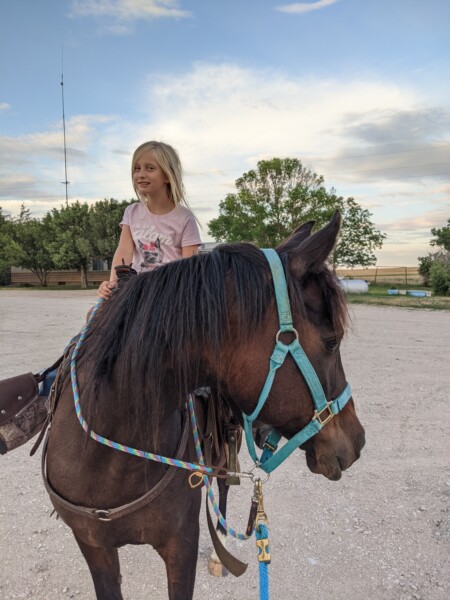
The kids wanted to ride last night. It’s been awhile and took quite a bit of time to get saddle and cinches, and children sorted.

It made me think through all the steps we take in the process of getting ready to ride. Thinking of +R as something that we do once in the saddle to help improve communication as we ride is limiting and only a small piece of the picture.

We’ve all heard the stories of horses who blow up when the cinch is tightened, as in holding their breath so the cinch stays loose, but also the stories of horses who blow up as in throw themselves to the ground or over backwards. Then there are the ones who wont stand at the mounting block or walk off as the person swings into the saddle. We can use +R to help with those issues too.

First and foremost making sure there are no pain issues and that we are tightening the cinch/girth slowly and politely is the most important. Once those are taken care of we can add a click and a treat to make the whole saddling process more enjoyable.

To start with I like to click and treat my horse as I add each piece of tack. Set the blanket on their back, click treat. Saddle, click treat. Check and adjust the cinch on the off side, click treat. Tighten cinch in slow increments, click and treat for each adjustment.

This may seem like a lot of clicking for one small action. I have horses who came with very bad associations with being saddled and ridden. With a few extra treats we can change that association from bad to something they look forward to or at least tolerate willingly.

I want my children to learn to get on and off by themselves and I want my horses to line up to the mounting block and wait patiently and willingly for me. To help with both of these I never skip a treat when getting on. Line up to mounting block, click treat. Swing into the saddle, or no saddle, click treat. My kids struggle into the saddle, shove cookies in as fast as the horses can eat them through the whole mounting process. This not only teaches them to stand happily for mounting but keeps them from walking off because they are waiting for the treat they know is coming!

Then there are all the ‘scary’ things you come across as you ride. For me it is usually children, both in the saddle and on the ground. They bounce and flop and make lots of noise. If we add a treat to go with all those scary things they do the scary things quickly change from scary to a sign that a treat will soon be coming.

It is tins of fun and a great thing to refine our riding as much as we can. It is also important not to over look the mundane things along the way as we get there though. Don’t skimp on the cookies as you get to the riding part.


Manes, For Whorl Page

Readers Digest is one of my favorite magazines. They have great horse whorl articles in there.
They just don’t know it 😉
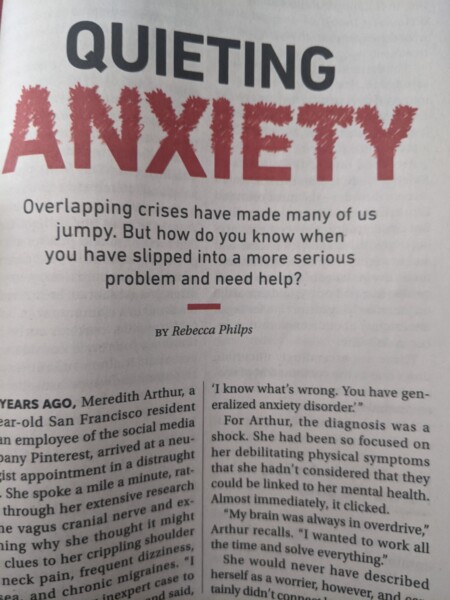
In the July/August issue there is an article by Rebecca Philps called Quieting Anxiety. In it she talks about a lady with ‘generalized anxiety disorder’.
The symptoms she shows?
Crippling shoulder and neck pain, dizziness, nausea, migraines. Physical symptoms of mental distress.
So what does this have to do with whorls?
Well, not whorls exactly but manes.
I have been extremely interested lately in how horse’s manes seem to switch sides due to mental issues, or being put into or removed from a stressful or difficult situation.
But there were no reasons we could give as to how mental stress could cause a physical change.
Here we have the reason. There is documentation that your mind can cause your body to hurt. Pain is a well known reason for the mane to switch sides. Pain can come from many sources, including the mind.
Fascinating.

Greatest Fears

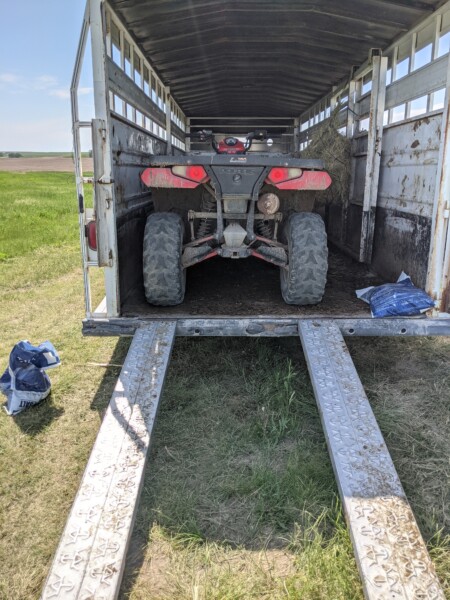
This may look like a 4wheeler innocently sitting in the trailer. What it really is is one of my greatest fears taunting me.

Backing a 4wheeler out of a trailer terrifies me. I would rather work on loading, or unloading, the rankest of horses. Those ramps. The lack of control. The thought of backing one out of the back of a pickup, way up high instead if the small drop from the trailer, makes me break out in a cold sweat.

Unfortunately for me, I have pasture to check. Cattle and water tanks need to be checked every couple of days, three days tops. I can either bounce a pickup clear out around the pasture using far more gas and putting lots of wear and tear on a pickup. Or I can bring the 4wheeler, make a much quicker trip, use less gas, use a vehicle that is made to bounce around the pastures. I need to use the 4wheeler. I need to get over my fear.

I’m not going to do that by forcing myself to do it. Telling myself that my fears are stupid, I’m obviously in no danger isn’t going to be of much use either.

Instead I go through careful and stringent safety procedures. I double check ramp placement. I double check that wheels are lined up. I do everything in my power to make sure it is safe.

I only do what I’m comfortable with. There’s no way I can haul it over in a pickup and back it our of the bed. So I don’t try. I can slowly and carefully handle the low trailer, so I do.

What does any of this have to do with horses?

Everything!

If we are scared to do something with a horse it does us no good to do it while we are trembling in fear. Being told our fears are stupid doesn’t help either.

The most useful things we can do are to stay safe, prepare carefully, and slowly build up to where we are afraid so we can accustom ourselves to what we are facing and become more prepared as we get there. Once we work on all these things we may find that the thing formerly so scary is not as scary anymore. I backed out of this trailer today, after carefully double checking everything, without the usual lump in my throat! Pickup bed here we come!