Lessons With +R

Another post I’m writing here to add to the Academy page. This month the theme is riding with +R.

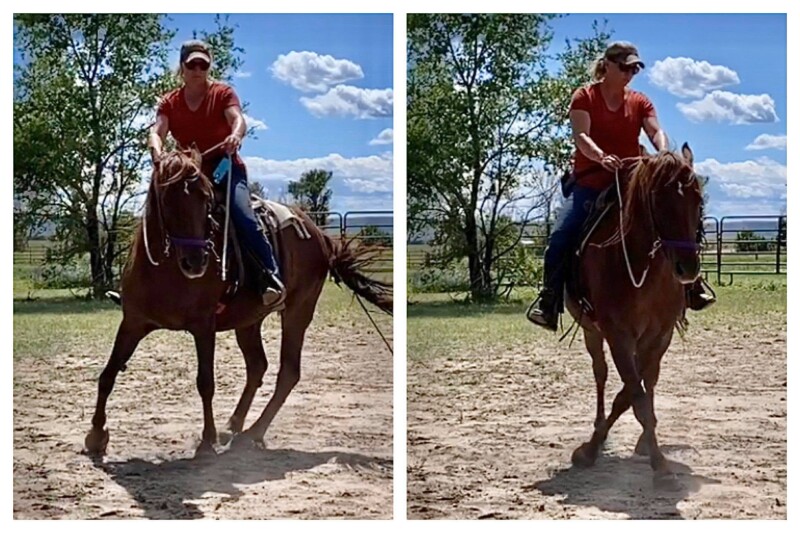
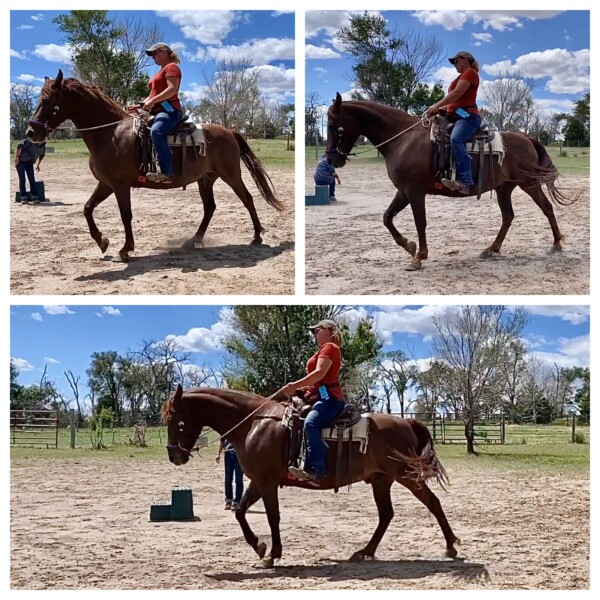
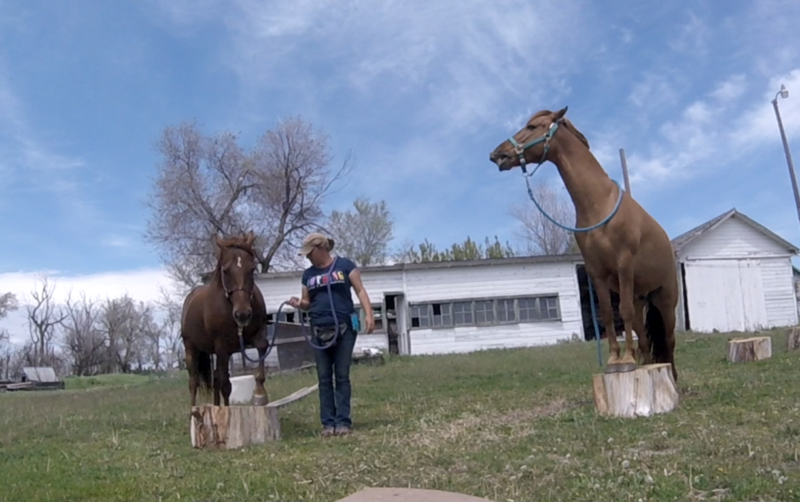
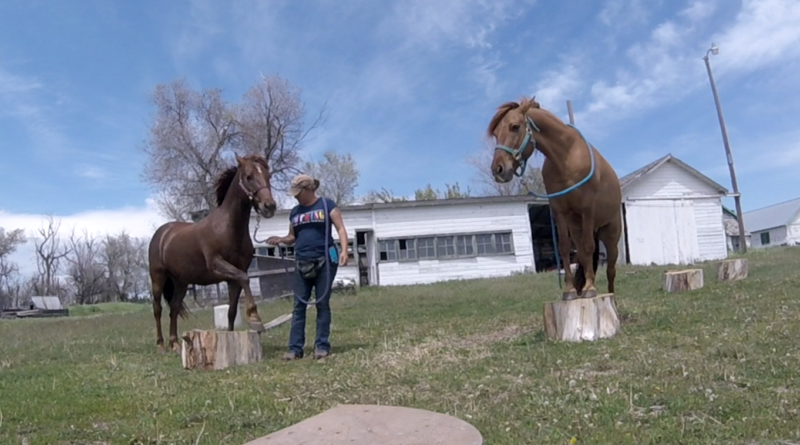
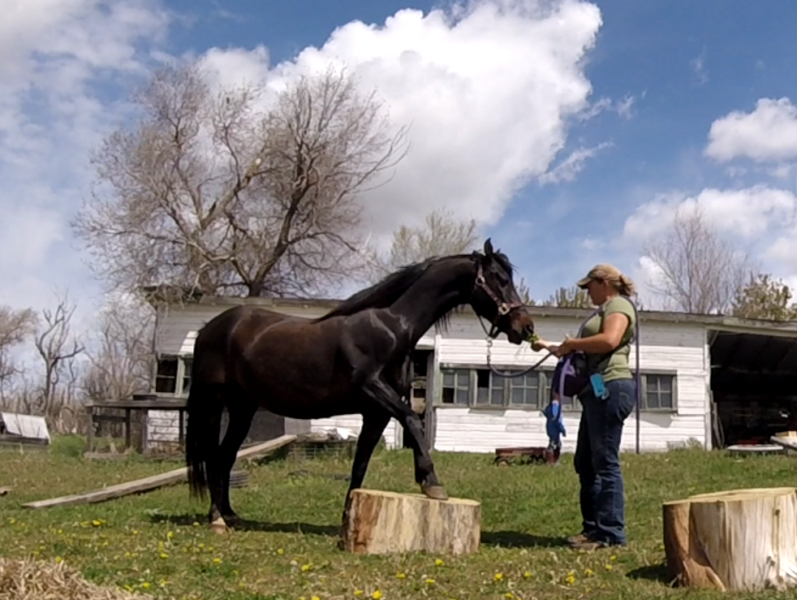
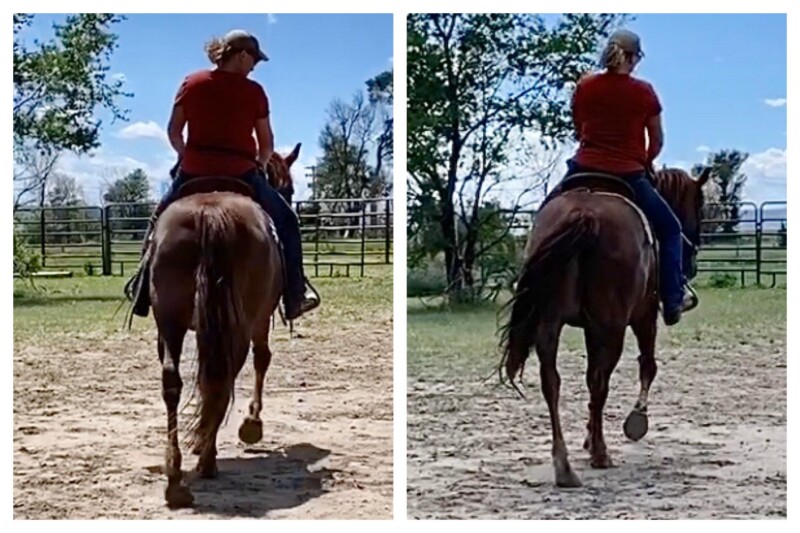
I was lucky to be able to haul two horses out for a lesson yesterday. Even luckier that the lesson got to be with a trainer who, as well as being a very skilled trainer and rider, also uses positive reinforcement. If anyone hasn’t met Andrea I highly recommend checking out her page. She’s always sharing great training advice and it’s fun to see the horses she’s working on. You can find her here https://www.facebook.com/millshorsemanshipandhoofcare/

Taking lessons can be difficult when trainer and trainee don’t follow the same training principles. Some people get outright upset at the thought of feeding food while riding, or at all. Finding a trainer who is willing to allow you to train your own horse in the way that you want to is one of the most important things we need to look for in  a riding instructor. Many trainers who don’t do clicker training, or positive reinforcement themselves will still be willing to wait a moment while you reward with a treat or even get in on the game and point out places where you should be clicking.

Because we didn’t have to worry about whether we agreed on using a clicker or not, she had her own treat bag strapped on all through the lesson, we were able to get right down to business.

I was hoping to get through a few anxiety issues with Heildorf and she immediately put him to sleep with the tapping techniques she’s been working on. So we left him to sleep and got Rusty.

Rusty and I don’t have any problem areas we needed to work through so we began a basic dressage lesson to see if she could find any major holes and offer us specific things to work on.

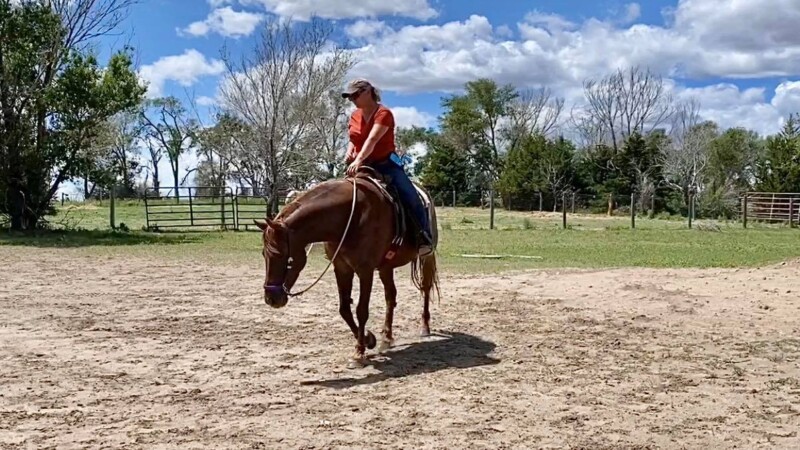
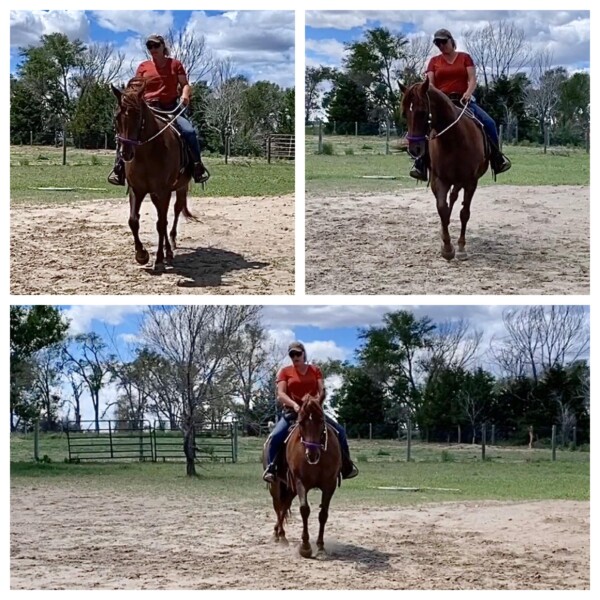
We worked at a walk, if there are holes there then there’s no reason to start trotting. Stretching and bending were a great starting place. Being able to click him and let him know exactly where and what he offered that was what we were looking for made short work of each separate piece allowing us to move forward quickly. Andrea could instruct, I could help him find the place, and click  him for it as soon as he got there. Knowing exactly what we wanted helped him know what to offer. He could go straight back to the correct movement and avoid any stress, he gets very upset when he doesn’t understand exactly what is being asked of him. If we don’t recognize the signs he gives showing his upset it would escalate or he would quit offering all he has to give.

We were able to cover lots of ground quickly. Finding proper movement and position is LOTS of work for a horse who is out of shape. By letting him find the right thing quickly then  rest, he was able to do the work without wearing out and souring.

The lesson was wonderful and being able to click and reward him all the way through made it fun for both of us. Riding should be as enjoyable for the horse as we are able to make it. Endless drilling without any reward for the right answer is no fun for anyone.



Hide And Seek

I was lucky enough to have company come play with me and Rusty yesterday!

She even asked if we could play Hide and Seek! Usually I try to convince them to play and they refuse. In the past we’ve worked on teaching Harvey to find her and Rusty to find her brother. Rusty caught on quick to the new target though and went right to finding her.
Rusty is being lead in the way I prefer to use my halter and lead rope. With the halter over my shoulder and the lead rope laying over his neck. This is so much easier for both of us, I have the ability to offer some guidance and he isn’t getting his face pulled on.
Our goal is for him to find whichever small child when asked, by scent or sight. It would be fun to add a lot more difficulty, having to search the entire yard or have them hidden out of sight. That is going to take quite a bit more work though.

For no we tried quite a few different hiding places and would have tried more but my helper got tired of the game. Maybe I’ll be able to get her to come play with me more, there’s a lot of fun things we could do with this game!


Riding With +R

Our treat delivery is a very important and often over looked part of our training.

We make a contract with our horses that when we click they get a treat. It is the foundation rule of positive reinforcement. Breaking that rule can break the trust and ruin our training.

Even if we give a treat every time we can still earn their mistrust if we don’t practice good treat delivery. As soon as we click, not before but immediately after, our hand should be in our treat bag preparing to deliver.

If we have to take the time to unfasten the carrier, if we fumble about dropping treats, if we get distracted, all these things can cause stress for our horses and make them less eager to work with us. We need to work on and practice a smooth clean delivery.

That same premise applies to riding with positive reinforcement.

The positioning is different than it is on the ground. I like to use different treats when riding because of this. My usual hay pellets are hard for me to feed, a bigger single cookie is easier for me to feed without dropping.

Horses can get over excited reaching for their treats if we don’t work on good positioning from the saddle like we do on the ground. Throwing their heads in the air and stumbling backwards looking for a treat is no fun when we are sitting on their backs.

It is important for us to keep hands low and reach well forward to make it easier for them to reach. Bracing an elbow on your knee can help keep everything stead and in a good position too. If you can reach that way. Switching sides that you feed on keeps your horse stretched evenly on both sides. A light tap with your fingers or a scratch on the neck can serve as a signal to your horse to know which side to expect the treat from.

Poor feeding position and over excitement in the horse can easily lead to fingers getting nipped.

In this video it was one of Harvey’s first times having me sit on his back. I wasn’t practicing good positioning and he was VERY excited about getting his cookie! The second part is a slightly later ride. I was doing a better job with my offering which helped him to calm down and placed his head an a more comfortable position.


Out To Pasture

This last week has been long. It’s been hot. It’s been exhausting.

I did get to ride a couple of times and even work cows on Rusty which is always fun. There hasn’t been any training time though. I have to listen to Rusty calling me from their pen,  heartbroken that I am ignoring him.

I see them all as I turn them out to graze and bring them back in so they don’t founder, or decide to graze the in law’s yard. Yes I’m talking about you, Smoke 😝

It should be done now though.

I had planned on dedicating today to getting life back to normal. Washing the growing mountain of clothes gathering in front of the drier. Finishing planting the garden. Cleaning house a little. Paying attention to my children. Silly little things.

The kids were big help occasionally though. They’re getting so big.

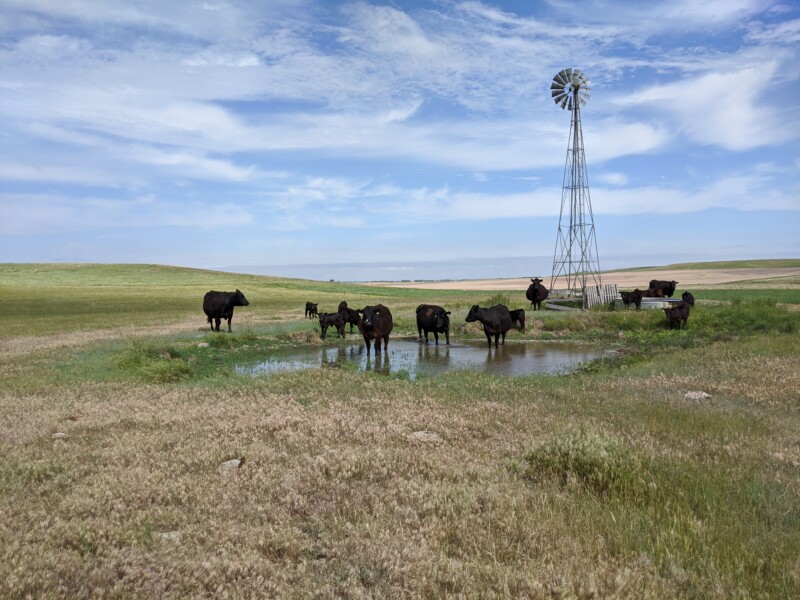
We went over to check the cows and calves that went out to pasture yesterday after we worked them on the hottest day of the year so far. One of those days that leaves your heart pounding in your head and your clothes soaked through with sweat that it is nearly  impossible to drink enough water to replace. They were happy to be out on grass though and everyone looked happy today, making good use of the windmill pond.

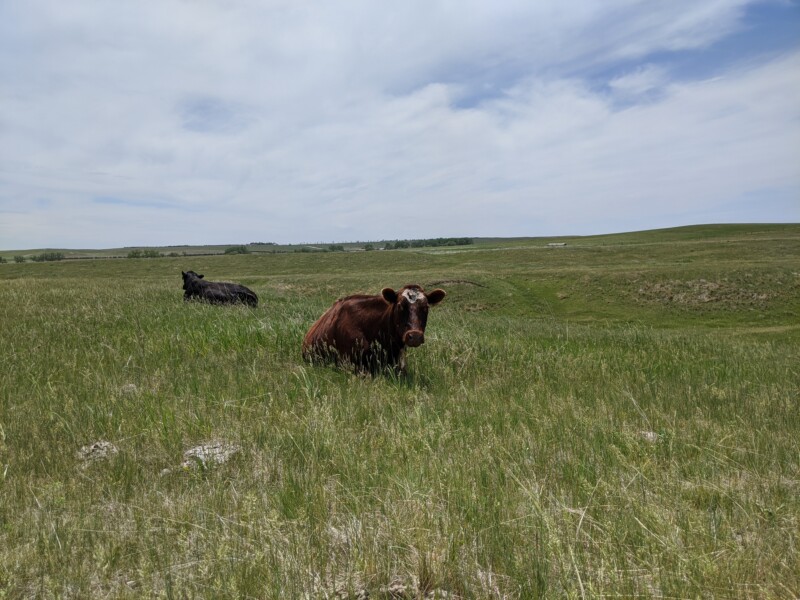
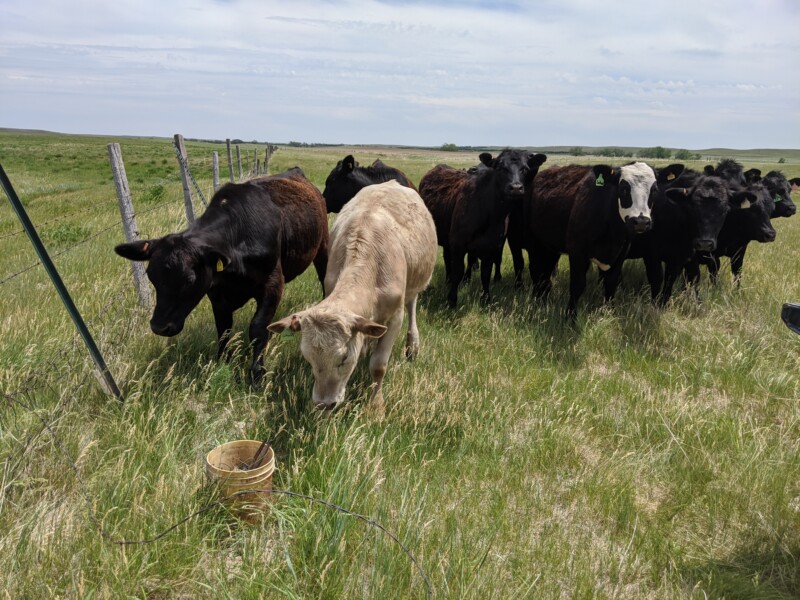
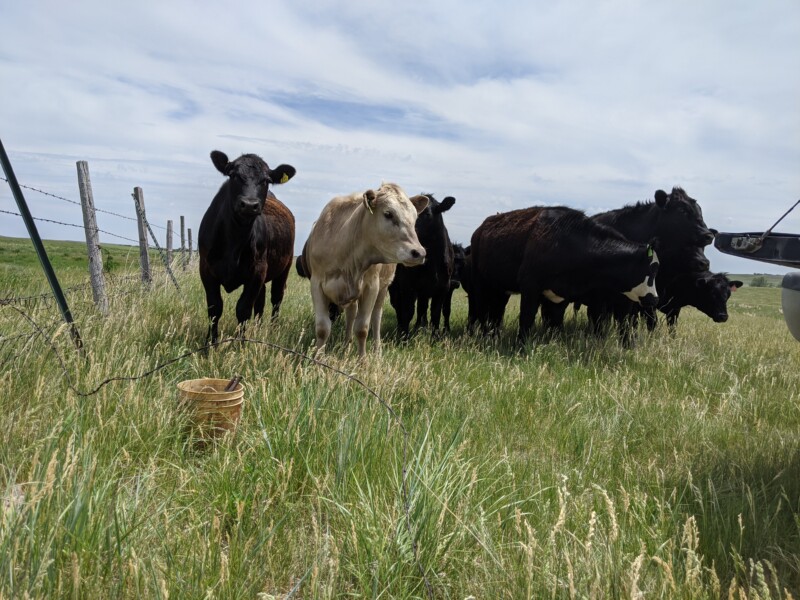
After lunch  we went over to check on the yearling heifers, and Poppy, and see how they were doing in their new pasture. They are separate from the rest of the herd so they can be with a bull who has low birth weight EPDs. His babies are supposed to be tiny when born so heifers can have them without trouble, if you’re wondering what that means 😉

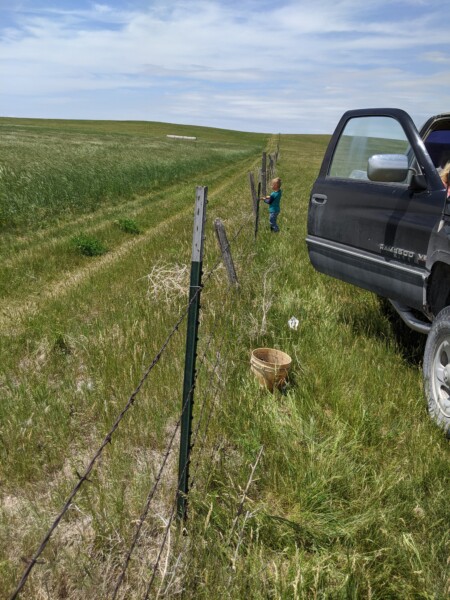
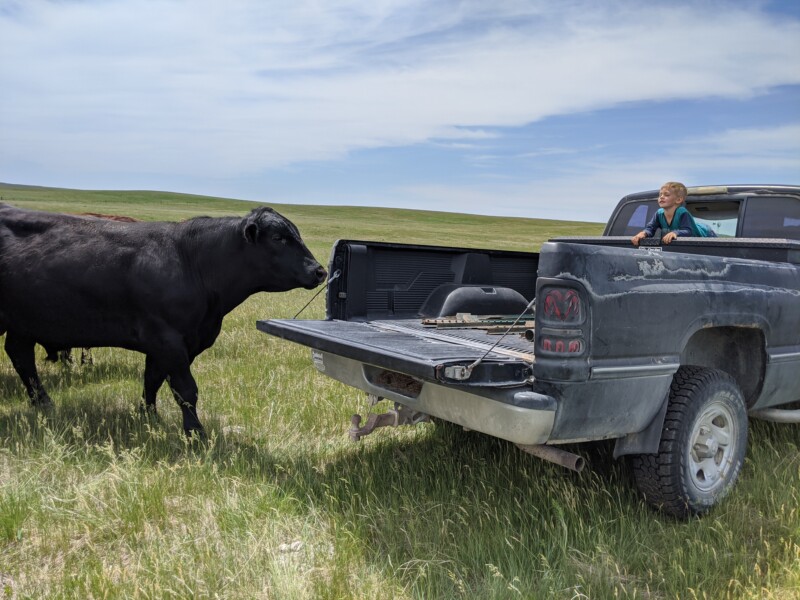
Driving out to see them though we found a few places inn the fence where a few posts in a row were broken off and blowing in the wind. Luckily we had a few fence posts and a driver in the bed of the pickup from fixing fence in  the other pasture earlier. We well used those up and had to go for more.

We did finally make it to the cows though.

I had brought my treat bag and a halter. The goal for the day was to remind Ghost that she was tame even though she was out in the pasture. No turning into a feral animal for her!

No  need to have worried though. She wasn’t concerned about running away. She even let my son, who is usually pretty scary, come right up and pet her. She was better about her halter than she had been the last time, a wonderful side effect of training with positive reinforcement.

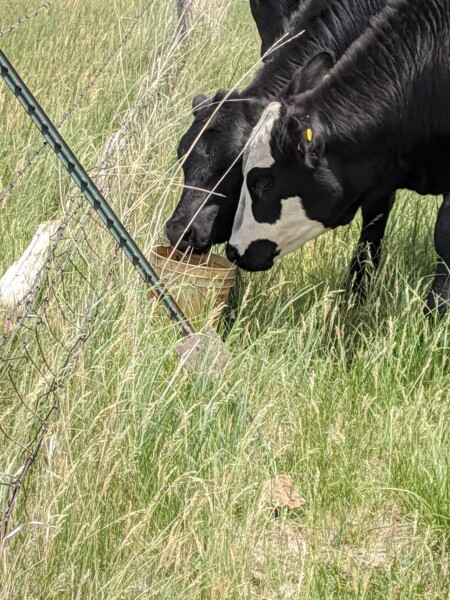
Poppy didn’t see any reason to get up to eat her cake. It made me wonder if cows can eat new food while they’re chewing their cud? Will things go into the wrong stomach?

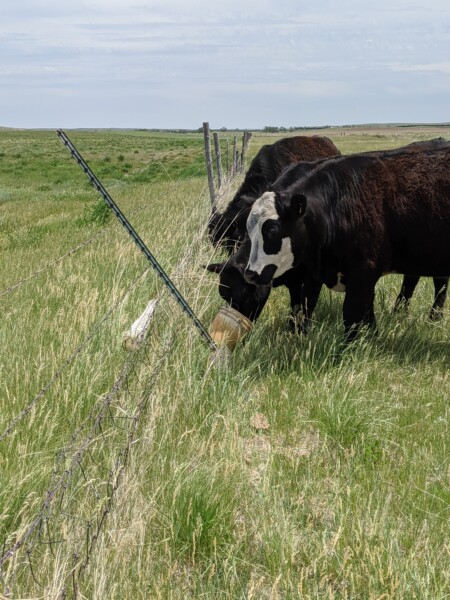
Unfortunately we had quite a few posts to replace right after visiting the cows. They followed us along and ‘helped’. They were a bit of a nuisance.

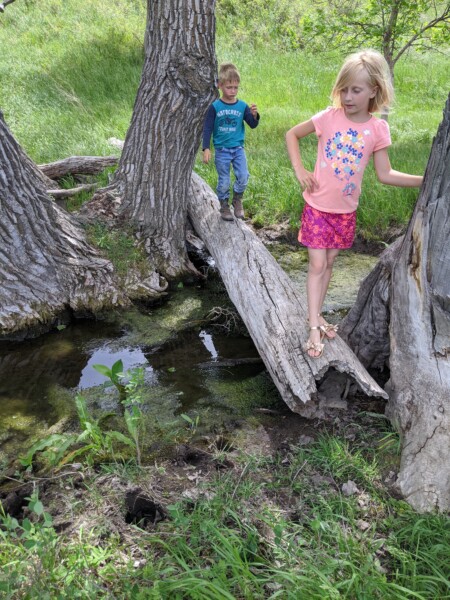
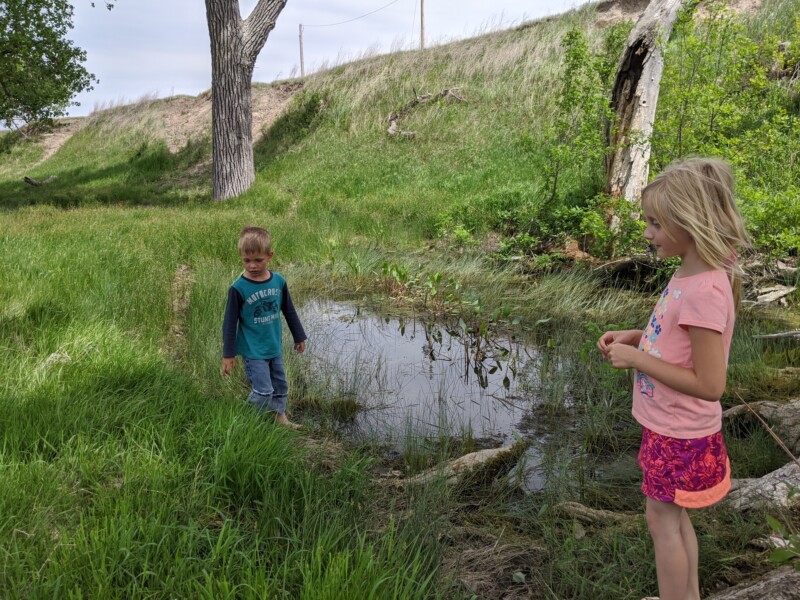
We finished the fence. Refilled our water jug at the windmill, then stopped to wade in the creek a little before heading home. It was another very busy day. Lots of time spent with children! So much for house cleaning though.


Sorting

This is my trick horse Rusty showing that he really is a working ranch horse.

He has been trained almost completely with positive reinforcement, is ridden seldom, and actually works like this even less.

I hear fairly often that people don’t have time to teach silly tricks because they are busy working on ‘real’ training.

Because of our silly trick training Rusty knows how to learn. He listens closely to everything I have to say and I have a clear well defined way to tell him “yes, that is exactly what I want”. He is able to figure out quicker what our goal is that way.

I may not be able to click him for every time he turns good with a cow, but I can every time the cow goes through the gate before we go for the next one.

He learned after just a couple of times that when I lay my hand on the back of his neck and say ‘that’s good’ that we are done with that cow and to stop tracking her.

This wasn’t one of our best sorts. Hard to work well and hold a phone at the same time We got a cow we didn’t want through the gate because of me messing around with my phone instead of keeping my full attention on what we were doing. Oops.

Look how calm Rusty is though. No head tossing. Working well one handed, bitless too.

The trick training comes in handy when it’s time to work but more work would also help with his all around training.

Nothing gets a horse listening better than cow work. It’s slow, easy there, then quick, hurry up as fast as you can. Now slam on the breaks and turn. The steering calls for exact precision to push one cow forward out of the herd while stopping and turning back the cow next to her. Every drop of it builds trust and communication between horse and rider.

These were the last of the cows that didn’t have calves sorted out of the calves and cows who appeared to have calves judging by their bags. The last ones are always the hardest but thanks to Rusty the job was a lot easier.


Organization

While it is important to be organized physically, to have everything in its place and to have a schedule to follow, it is also important to be organized mentally in our training. 🧠

⭐ Knowing where we are going next in our training and how we plan to get there is one of the most important things we can do. ⭐

It can be fun to go out and see what our horse has in mind, to see what he wants to do and is going to be good at and go from  there. Letting our horse lead us can be one of the most rewarding things we can do.

But.

While it is important to keep play as an integral part of training and let the horse shine in the areas he is skilled and willing,  without a clear plan in mind even this can become stressful.

If we enter each training session with a clear goal in mind we can help steer our horse, and ourselves, cleanly without clicking behaviors we hadn’t intended. It can be great to be able to capture a behavior when offered unexpectedly, it can also be very confusing to our horse if we start trying to shape more than one behavior at a time.

Before going out to work it can be helpful to have an end goal in  mind and a shaping plan to reach that goal. A list of behaviors we need to teach and the order they need to be taught in in order to build the end behavior. We should have an idea of the full training plan even if we only plan to work on the first step so we are prepared for any leaps in learning the horse accomplishes and not left wondering what to do next.

If our training plan isn’t working out the way we had planned it can be more beneficial to stop and take a break to reorganize instead of pushing onward in a haphazard manner trying to force it to work.

For organized training we need:

✅ A clear,  well defined end goal

✅ A plan to reach that goal

✅ One step at a time

✅ One behavior at a time

✅ To retreat and rethink is better than clinging to a plan that isn’t working

Being organized in training can  be eassy as long as we remember these simple guidelines.


Fetch, Or Not

Harvey and I have been working on fetch for a very long time now.
He is able to pick his ball up, it’s deflated but it’s still a ball 😆 and hand it to me. Walking forward at all is more than he can handle though. I tried to help him since we have leadropes on right now anyway.
Can’t hold the ball and move feet. Just not happening.
What he does tend to do though is to give the ball a little flip as he lets go. You can’t see it in this video but I’ve decided if you can’t beat them join them and am trying to capture that flip.
Instead of retrieving his ball maybe Harvey can learn to throw his ball!

Achieving The Impossible

I have a friend who is great at working multiple horses at liberty.

Sometimes I would look at her and the things she is doing and say that it’s nice that she can do that. My horses can’t though. It’s different. They are different. If my horses were like hers then we could do it too. But they aren’t so we can’t.

Rusty is out there chasing and trying to eat any horse that gets close. There’s no way we could ever manage something new and different like that.

We all have a tendency to look at new things with that outlook.

Sure THEY can do it, but only because their horses just happen to be able to. Only because they’re lucky. Only because things happen to be just right for them.

It’s different for me. My horse doesn’t know how. I’ve tried it didn’t work. We just can’t.

That’s not how it works though.

Every time someone says oh, your horse is so smart to know how to do that I have to laugh a little inside. My horse didn’t come knowing anything but how to run people over. Anything he knows is a result of hard work and training. Yes he is extra smart and willing but without guidance that could all be used to wreck havoc on the world instead of to do good.

The last time I thought that about my friend and her horses I stopped and really thought about it. Instead of saying I can’t what if I thought about what it would take to make it so that I could? Sure the end step was impossible for us just then but what about a tiny step towards that goal? How could I work with my horses to help them to be able to handle working together?

Everything is impossible if we only look at the end goal. If instead we look at the tiny steps everything is possible!


What Is A Reinforcer?

People always want to know if they HAVE to use food to train their horse if they are going to use positive reinforcement?

Technically the answer is no. A reinforcer does not have to be food. All it has to be is something the horse finds rewarding. Something that they are willing to work in order to receive.

In the spring when winter coats are shedding my horse is far more interested in scratches than treats.I offer food and Rusty moves up to position me properly at his itchiest spots.

We can take advantage of times like that to teach certain tricks that are easier taught with that reinfrcer. Asking a horse to step over to you for example. Give some good scratching then step away a small step. When they move towards you go back to scratching. They learn without even trying. Start adding a cue and you have it down!

When the green grass begins to grow and there is nothing else a horse can  think about, cookies aren’t able to compete. I spent way too much time this spring trying to feed store bought treats before it occurred to me that we were walking through a plentiful supply of free reward. A treat bag stuffed with handfuls of grass is far more interesting.

Even using grass as my reinforcer I can’t compete with free grazing. Before working with the horses I try to make sure they get plenty of tie out eating the grass before we try to work. The horses don’t have free access to the grass. They would all be fat and foundered if they did. Letting them have enough to take the edge off helps them to think  about something besides eating, while I train them by letting them eat 😉

There is a difference between offering food that they want as a reward and trying to keep their attention on me instead of the grass we are working on top of though. I’ll be happy when the new wears off and we can go back to the calm  ropeless sessions we are used to. Until then I will be walking around with grass sticking out the sides of my treat pouch like an over stuffed scarecrow.

On the other hand, if they’ve been out eating grass for a few hours they will sometimes turn their noses up at my offering of grass, preferring the hay pellets. What is rewarding to the horses changes constantly and we need to be aware and able to change with them.

There are other things that serve as reinforcers too. Traditionally stopping work and turning a horse loose has been used to reward good behavior. There is a fine line between reward and negative reinforcement in some cases. When we remove something they don’t like, riding in some cases, that is offering relief. Relief is not strictly a reward, it is a reinforcer though. It increases the chances of the behavior happening again.

It often works well to stop what you were doing and just hang out as a reward. Especially if grazing is included in that. Stopping work can also be a punishment though. When the horse enjoys what you are doing and you stop that is not reinforcing the behavior you wanted. Mine will often be confused and go back  to what we were working on looking back at me as if to ask why we stopped the work they had been enjoying so much?