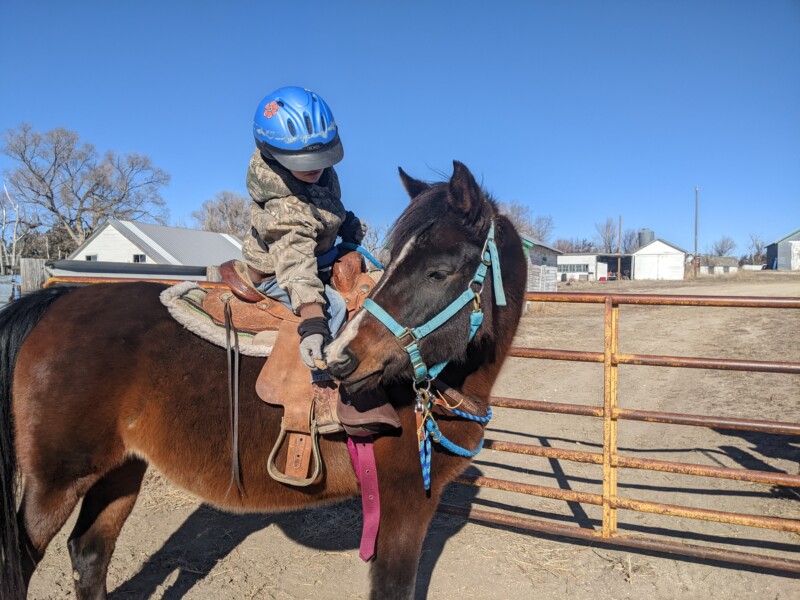
Growing up we were never told that we shouldn’t feed horses.

The lack of formal horse education was a wonderful gift to be given. Without being told all the things we should never do with horses, we didn’t know any better than to just do what worked. We fed our horses treats. Anything they would eat. We might know a little better now and not feed things like baloney sandwiches anymore.  We didn’t know we weren’t supposed to listen to their opinions and had conversations instead of making them respect us.

Not knowing that all these things were even a thing, we were able to form our own ways of communicating and working with horses. We didn’t carry all the baggage to get in the way of our relationships.

As adults, or close to, we were informed of how things were ‘supposed’ to be. But like with adults who were taught the opposite of what we were as children, we already ‘knew’ how horses should be treated and didn’t accept the new information. We kept on keeping on in our own way. The new training was considered and maybe even experimented with. But the old ways were always there, lightly buried and ready to be dug up when it was clear they worked better.

I could never understand why I would ever not give a cookie with the bit. Horses took the bit so much easier. Before I ever heard of positive reinforcement it was plain that if I scratched a horse or gave cookies when they did what I was looking for they understood that they had done good and did it again so much easier.

I was told over and over again that my horse was testing me and didn’t listen as good to me as he did to others. I needed to make him behave! It was clear to me if no one else that he may be rotten, what others considered rotten, I loved his spirit, but he gave me one hundred percent. He would think for himself and do what he decided was best. We didn’t always agree, but I soon found out that his ideas were usually the right ones. He saved us from all sorts of trouble and together we came up with tricks and ideas. Other people would get on and he would plod quietly. Not offering ideas, or giving the help that he did with me. The spark was hid. Waiting until we could get together again and do more.

Sometimes a lack of knowledge can be the greatest aid to learning. We don’t know what can’t or shouldn’t be done, so we do it anyway.


Teaching or Training?

Teaching and training are synonyms. Technically they mean the same thing. As with all synonyms the devil is in the details. The exact nuances implied by using different words can make a big difference.
I enjoyed these definitions of the two words.
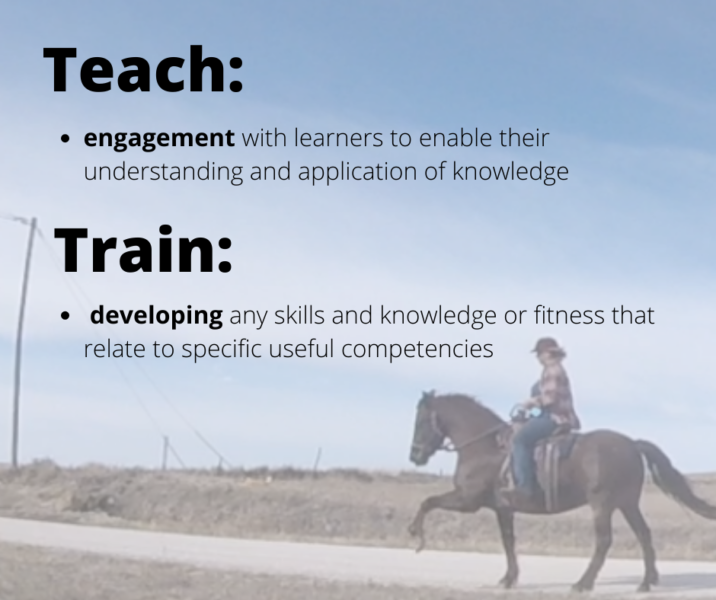
Teach:
Teaching can be defined as engagement with learners to enable their understanding and application of knowledge, concepts and processes Teaching is the process of attending to people’s needs, experiences and feelings, and intervening so that they learn particular things, and go beyond the given.

to guide the studies of.
Train:
Training is teaching, or developing in oneself or others, any skills and knowledge or fitness that relate to specific useful competencies. Training has specific goals of improving one’s capability, capacity, productivity and performance.
At the risk of sounding pedantic the words we use matter.
Why do we teach children but train horses? If we look at these definitions teaching is engaging. It is working with the student to help them understand. It is attending their needs. This can be seen as a conversation, working together to enable them to do their absolute best. To enhance skills and abilities to ‘go beyond the given’.
When we train we are imparting our skills upon them. We are working towards a specific goal that is predetermined. It isn’t a bad thing. When there is one specific job to be done we need to learn, or train, how to do that job. It doesn’t allow leeway though. It is a one way conversation.
Next time we are out working with our horses maybe we should pause a moment and think about whether we are training them or teaching them. Do they get some say in the matter? Are we working together to help the horse reach the absolute best of their abilities in a way that they are allowed and welcome to have a say in.
I think I might just start calling myself a horse teacher instead of horse trainer.

Greeting Neighbors

Ice crystals hung heavy in the air, circling the moon in a ring of light. The evening check on the cows was cold. We bundled up as best we could and took turns driving the fourwheeler so we could each have a chance to warm our fingers.

Driving through the herd in the dark it was a relief to not see anything going on.

Numb in the parts that were previously cold, it was time to head back to the house. Turning that direction we looked up to see lights in the distance. This isn’t unheard of. The highway is off that direction, only a couple of miles away. This was a single light and not traveling through. The ice in the air caused a beam of light to rise up high into the air above the ground source. A beacon in the distance.

Laughing at the singularity of it all we forgot to be cold for a moment. The location of the light had to be our friends and neighbors on the other side of the highway. They are calving too. For this moment we were together, socializing as we braved the dark and cold to check our cows.

Back inside where it was warm I texted to say hi, we saw you! We made plans to meet again the next night, same place, same time. They would look up for our light too. Together from a distance.


Working Cow Horse, Cookies Required!

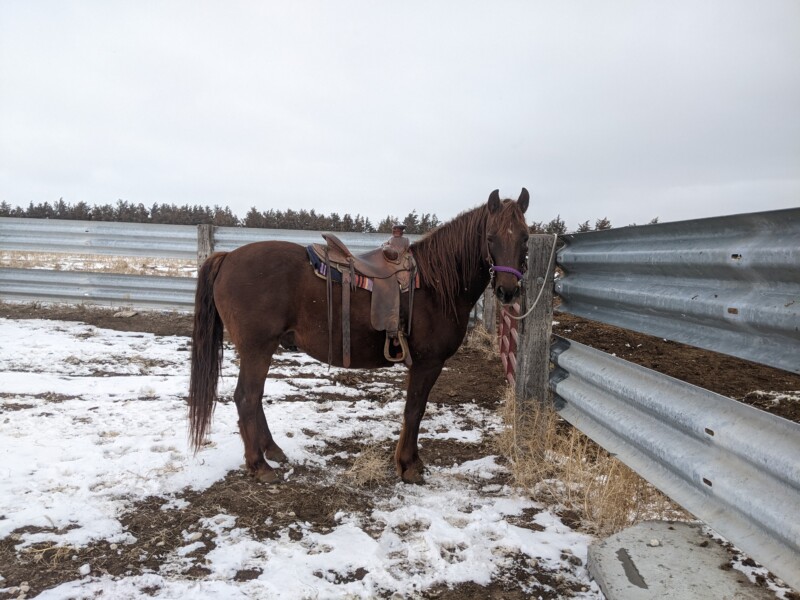
So what does it look like to work a ranch horse who is trained using positive reinforcement? I spent the morning sorting cattle and had plenty of time to ponder the differences.

For the most part it looks just like it does to work with any other ‘normal’ ranch horse. Some of the differences are subtle. You might not notice at first that I’m wearing a treat bag. I keep it stuffed with cookies for my horse that my pet cows and goats will also like if we should have a chance to stop and visit. There are times my horses always get cookies. After getting a gate and when I get back on. There is a large amount of getting off and I appreciate that he will position himself nicely next to whatever I use as a mounting block. Because I want to insure that he keeps doing that I reward it generously.

Some of the differences are more noticeable. Even though Rusty is nearly ten he and I haven’t gotten to do as much cow work as I would have liked. He’s still really green when it comes to this stuff. That means that when we have time and he turns good with a cow I click him and reward. There were a few times this morning when we didn’t technically have time. We needed to get up there and catch up with the heifers we were sorting out. He did such a good job, sitting on his hindquarters and turning on his own, I clicked him anyway and took the time to give him a cookie. We got caught up with the heifers, they could only go so far, and because we didn’t go charging after them they had stopped or at least slowed and the work went smoother because we went slower.

Taking that time meant that after a few good turns Rusty was doing it on his own. I had been able to explain to him exactly what I wanted him to do. And he did it. A few times in and he slammed on the breaks, turned, and took off after a heifer so fast that I had to reach up from my perch nearly on top of the cantle where he was leaving me behind, grab mane and try to stay with him until I could click and reward big time.

Doing ranch work on my positive reinforcement trained horse teaches him so many things that he wouldn’t learn if we just focused on our +R training. Rusty has been learning to run full out on a loose rein, then come back to a stand still or a slow creeping walk and to do it calmly and quietly. He is learning to control and watch his feet across slippery and uneven footing. He is learning to listen to me as I give tiny exact cues to get him in just the right position to split two cows standing next to each other. He’s learning to take advantage of a chance to stand and rest, even if he had been going hard and fast just before.

Ranch horses work hard. Just like us there are times that we don’t want to work, even to get that paycheck, there are times they wouldn’t do the work. Not even for a cookie. There’s no way to do this job well using pure positive reinforcement. Pressure is used judiciously. Between the reins to cue and hold him back when he would want to charge through the middle of the bunch, and legs and seat helping move a shoulder around, telling him to GO now and do it fast, and slowly working to take the place of the reins in large part. He isn’t scared of the pressure, he isn’t bothered by it.

Ranch work adds to our other training and positive reinforcement adds to our ranch work. There’s no reason not to combine rewards with work. They each aid the other so nicely.

The benefits of using treats shows up in unexpected ways. After unsaddling Rusty where my saddle is stored so I didn’t have to carry it as far I turned him loose so I could put it away. With the whole yard to wander, he went to the hitching post where he gets tied to be saddled and brushed and waited for me there. What a good pony.


How Do We Know Whorls Work? HorseWhorls

Why would looking at whorls on a horses head or body be able to give us any information about the horse?

It seems silly doesn’t it. Why do we bother looking at whorls and think they will tell us anything? Believing a bunch of old wives tales is ridiculous.

Although the stories have been around forever, we are finding new, scientifically based, reasons for their existence all the time. Just because the science wasn’t there before to tell us why whorls work doesn’t mean they didn’t work until we found out why. All the recent studies do is confirm what we already knew.

The skin/hair layer develops in the womb very early on, while the fetus is still so tiny that everything is touching and connected. As it grows any pressure from the inner layers onto the outer layers causes changes in the way the outer layers develop. It can be physical pressure or extra blood flow. As the fetus grows those changes stay in the skin to affect the hair growth.

It makes sense that some of these changes are ones that are passed genetically, temperament and conformation are passed from parents to foal so matching whorls would be expected. In a recent study scientists were able to isolate the genomic regions associated with hair whorl traits in horses.

Genomic regions associated with hair whorl traits in horses were successfully identified, they reported. In these regions, many genes related to hair follicle growth were investigated, with evidence indicating they influenced whorl-related traits, “some of these genes also have known neurological and behavioral functions.”

That part is accepted and generally without question. The evidence shows that there is good reason to believe whorls and temperament are related.

That leaves us to figure out just how they are connected. While there have been some very nicely scientific studies done on this, most of it is hearsay and personal experience. If we find two horses of the same whorl who display a certain behavior the next thing to do is to look for a third and fourth horse with the same whorl to compare behavior. With common whorls finding many horses who match is easy. Other times there are whorls that are so rare it is hard to find enough to compare. Other times the behavior is obscure enough that it is hard to isolate and relate to one whorl or whorl pattern.

The study of whorls is only just begun. There is so much out there left to learn. It’s going to continue to be a fun and fascinating journey!


Accident Prone, HorseWhorls

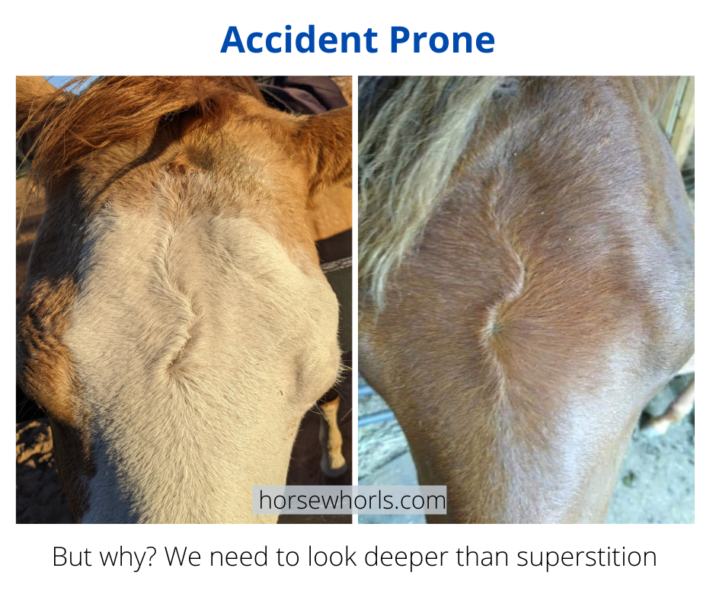
Some whorls come with very specific ‘meanings’. The S shaped feathering is one of those.

When a horse has feathering on their forehead that twists and turns, sometimes in the shape of an S, others are just squiggly, it is said that horse will be accident prone.

While it does often hold true I think it’s important to look at what ‘accident prone’ actually means. It should be fairly obvious that the whorl doesn’t cause the horse to get hurt. Whorls are signs of what is going on inside the horse, not portents of things to come. What we need to look for is what behavioral tendencies come with the whorl that may cause the horse to behave in such a way as to get themselves injured more often than is usual.

Unfortunately I don’t know what those are. What sort of traits would cause a horse to do things resulting in injury? Feathering coming up from a whorl show left brain traits. These include being confident, curious, friendly, calm, fearless. That doesn’t mean that horses who are left brain will always display all of these traits, they are examples of the sort of behavior we can expect to see, not a list of what we will see.

Could playfulness be the cause of the accidents we often see with an S shaped whorl? Being overly confident could mean not worrying about results as they play their way through life. Curiosity could easily lead to injury. Is the S shape of the whorl a sign that one of these traits is more strongly developed than when the feathering is in a straight line?

Unfortunately there are more questions than answers when it comes to this whorl type. The important take away is that whorls show behavioral tendencies. They do not show what a horse is destined to experience in life. We need to look for underlying causes instead of superstition.


Chivalry, Cattle Tricks 101

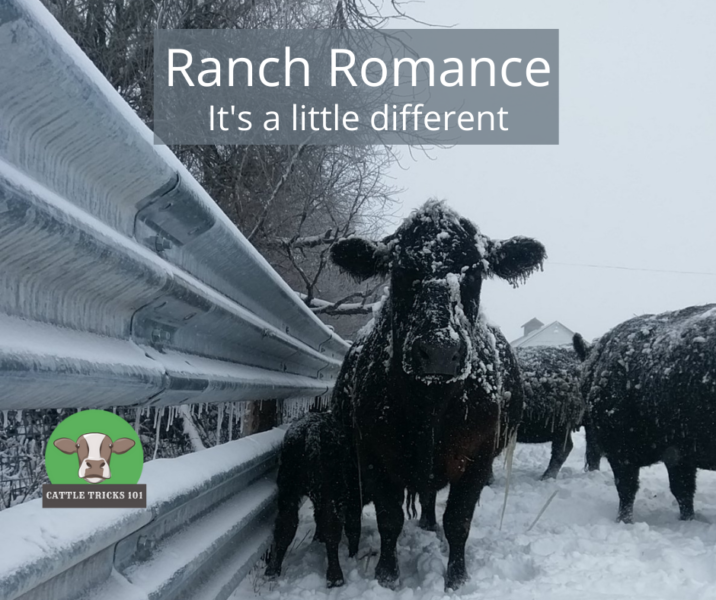
Chivalry isn’t dead. It just looks a little different on the ranch.

It isn’t that farmers and ranchers aren’t romantic and sweet. They just express it in different ways. Flowers are a nice gift. A bale of hay or a new cow are better.

Going to a fancy restaurant has it’s place. Hopping in the old ranch pickup to check cows together, his hand in yours as he gives a gentle squeeze and whispers softly, “I’ll get the gate.” is the best date there could be.

Poetry is romantic, I guess. Sweet whispered words that send tingles down your spine and weaken the knees are different for different people. “No Honey, you drive the feed truck, I’ll break ice.” on a day with the wind howling and temps well below zero is the most beautiful poetry out there..

When it comes to ranch life romantic gestures take on a different form.


We had a rough horse day yesterday.

Nothing awful but not great. My son loves his zippy little mare. She is great for him, putting up with his enthusiasm and zipping with care. He likes to get her to trot. It’s great fun.

I had turned to his sister who was riding Rusty to work with her a bit while he rode around. When I turned back he had made it clear across the drive. It’s a good ways. Far enough to him to really get up speed and have a long trot.

They were going to die.

He started trotting back. There was nothing I could do. They were building speed. I help my breath, crossed my fingers, said my prayers. She trotted faster, and faster. Then she broke into a canter. Ok, this could be ok. A canter may be scary but is easy enough to ride. They got almost back to us, almost within reach, and she ducked her head for a happy busk.

His life flashed in front of my eyes.

He stayed on! Hunched over, clutching the saddle horn. She was to me by then where she stopped quietly and happily. She had brought her cargo to me like she knows she’s supposed to. SO why was I mad?

For a moment everything was fine, then he burst into tears. That was scary!

As we all know you can’t stop there. Trying to offer comfort from the ground I made him stay in the saddle. Leading him around we walked until he had calmed down then let him down for big hugs and love.

That last bit was good. We ended on a good note. The ride today was just as important as the way we ended the one the day before. Mind set is so important when it comes to riding! How we feel is how we do. If we are comfortable and happy, our training sessions will be comfortable and happy. When we are tense and scared out horses can feel that as clear as day. Finding a place where we can be relaxed to work from can change the entire tone of our training session.

Today I left a lead on and walked right beside my son and his energetic mare. We stayed calm and quiet until he was ready to go again, right back where they had been before the little mishap yesterday.

Then we took steps to keep it from happening again. The rules got laid out clearly about how we do not take her far away so he can run back. If we get rid of the cause of the problems we can prevent them from happening again. One of these days he’ll be ready to ride a canter and happy buck, but not yet.


Rusty, Finally Feeling Good

It’s been a while since Rusty really felt good. He’s been sound and he’s been happy to play. He’s been standing at the gate having fits because I’m playing with cows or Heildorf.

Today when I brought him in he let me know he was bored with what I thought we would work on. Instead he was feeling energetic, fierce, and ferocious. As we started playing with some ground work he picked himself up into some extreme roundness. Ears flat back he was breathing hard in my ear doing nothing but walking. I asked for some trot, not something he offers regularly, when his feet hurt. He trotted when asked then kept offering a trot as we played.

This horse is amazing when everything is right. Hopefully we can keep everything right and start to build some muscle.

It’s hard to believe that this fierce boy is the same quiet pony that I happily trust my children on. He knows who he’s with and how to behave for all of us.


Right or Left Brain?, horsewhorls

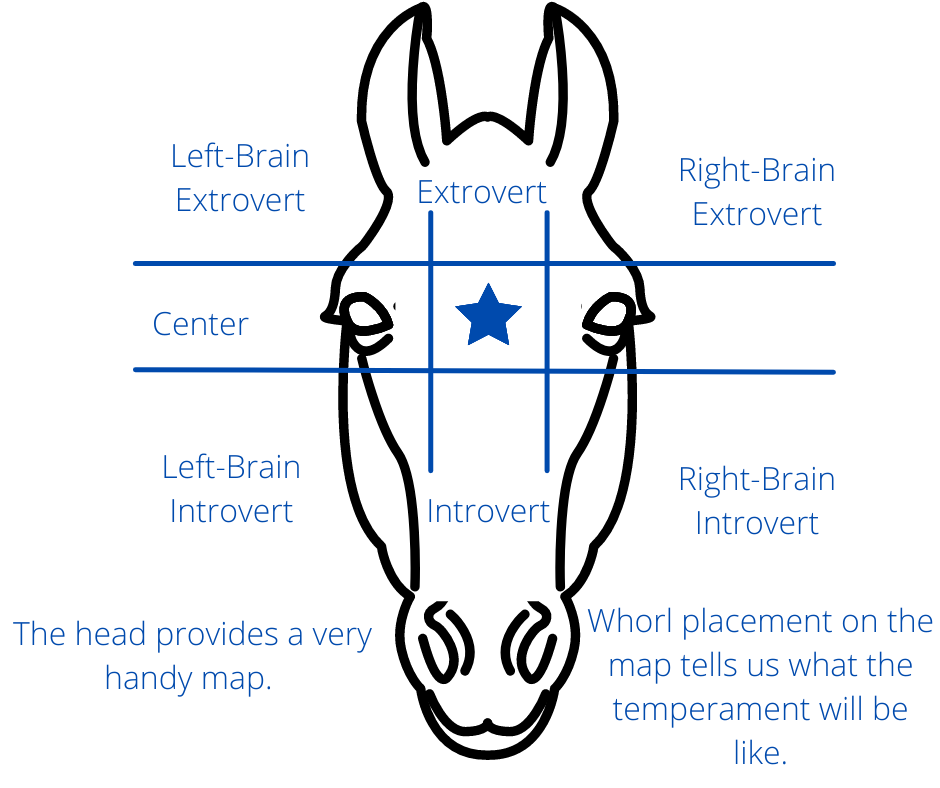
This horse has a high center whorl. That shows an extrovert. Extroverts are very invested in the external world, everything going on around them. They want to go, to be moving all the time. Intelligent, emotional, and sensitive they will be as brave as they can be and eager to please with a sensitive supportive rider or a nervous wreck with a harsh rider who doesn’t give the support they need.

What it doesn’t tell us is if he will be a right  brain or left brain extrovert. The two can be almost completely opposite. That is where we get into trouble if we only look at the whorl. It is so important to take the entire head into consideration.

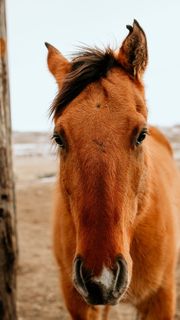
From the front we see eyes an average width apart, not much info there. The ears are wide but shapely, sensible, willing, not overly sensitive but not dull either.

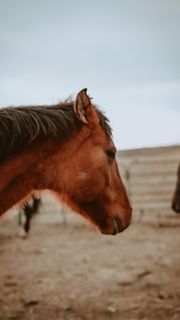
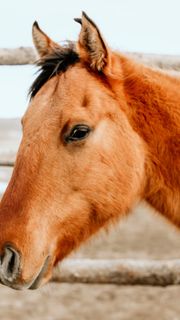
The side view gives us a mostly straight profile, steady, maybe a bit convex? That adds physical toughness. Not that they will be tough to work with but that they can stand up to hard work and their bodies can take it. The muzzle appears to be rounded, that shows some strong ideas of his own about how things should go. His eye is curious and interested in what’s going on around him. That whole invested in the external word thing. But without being overwhelmed by it.

I would say he tends more to the left brain extrovert side of things. Alert and aware but not worried about what is going on around him. More curious and friendly.